

Introduction
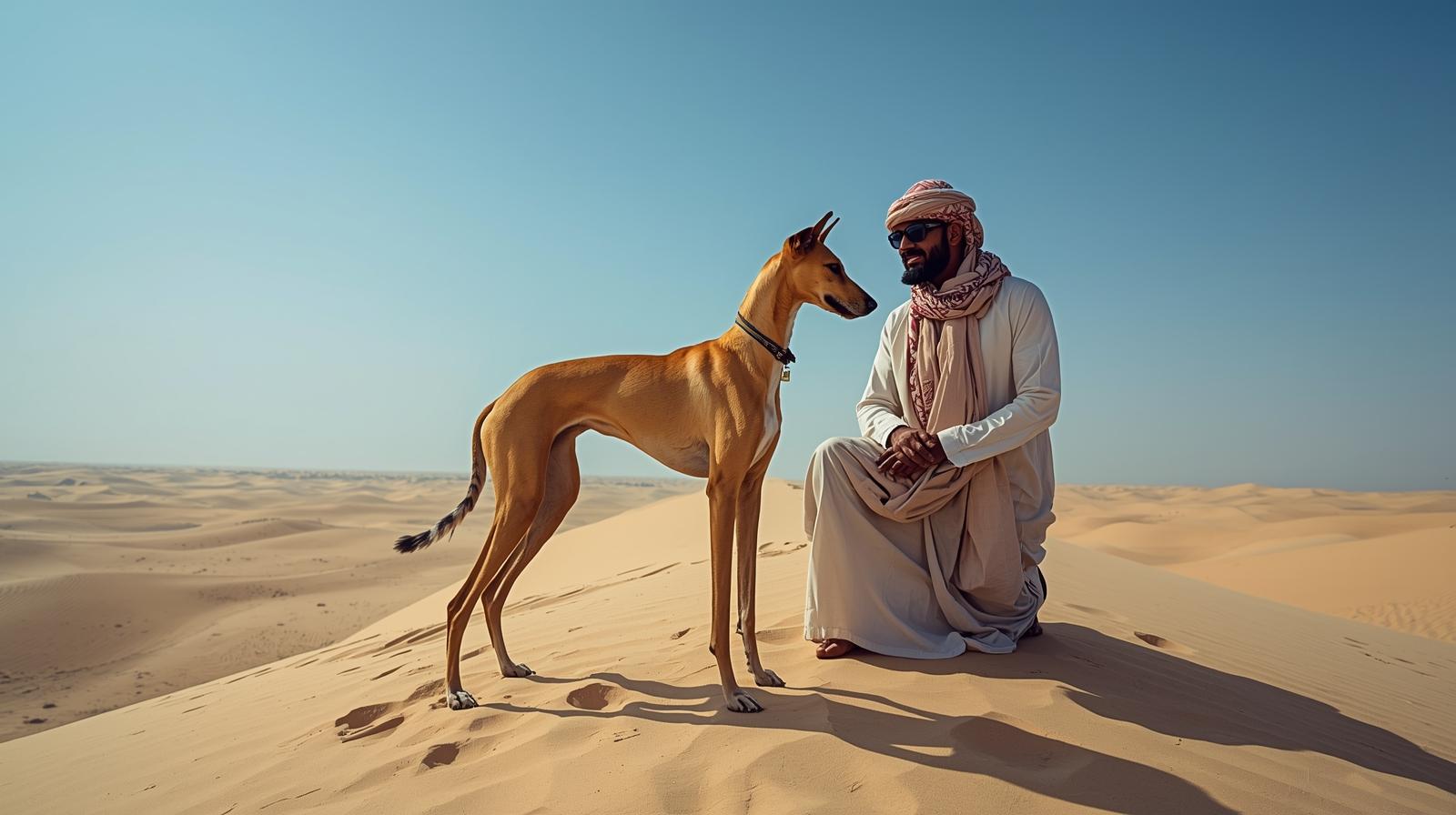
In the narrative of Bedouin life, where survival depended on a deep partnership with animals, the Saluki holds a place of honor second only to the camel and the falcon. This graceful, swift, and keen-sighted sighthound is one of the oldest known dog breeds, with depictions found in ancient Egyptian tombs. For the Bedouin of the Arabian Peninsula, the Saluki was not merely a pet; it was an essential hunting companion, a valued member of the family, and a testament to the tribe’s prestige. The preservation of the Saluki tradition in the modern UAE offers a window into the practicalities of desert survival and the deep, abiding bonds that defined the Bedouin way of life.
The “El Hor” or “The Noble One”: A Hunter Designed for the Desert
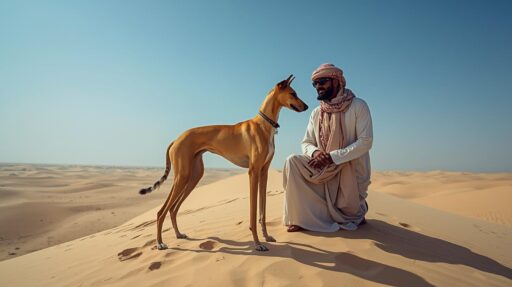
The Saluki is perfectly engineered for the desert environment. Its lean, aerodynamic body, deep chest, and long, powerful legs allow it to achieve remarkable speeds in short bursts, capable of running down gazelles, hares, and bustards. Its name is believed to derive from the ancient Yemeni city of Saluk, or from the Arabic “Saluqi,” meaning “from Saluk,” indicating its ancient Arabian origins. The Bedouin referred to them as “el hor,” meaning “the noble one,” a title reflecting their esteemed status. They possess a unique combination of speed, sight, and incredible endurance, able to hunt in the harshest conditions from dawn until dusk, often in coordination with falcons.
A Partnership of the Skies and Earth: Hunting with Falcons and Salukis
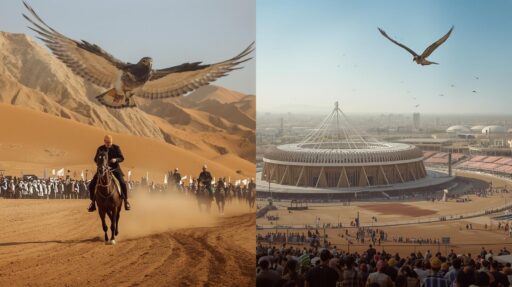
The most iconic hunting method of the Bedouin was the combined use of the falcon and the Saluki, a sophisticated and highly effective strategy. The hunter would release a falcon to pursue a bird, such as a houbara bustard. The falcon would stoop (dive) at the prey, forcing it to take evasive action on the ground. Meanwhile, the Saluki would be released, using its speed to close the distance and capture the grounded or distracted prey. This partnership between the sky and the earth was a breathtaking display of coordination, with each animal leveraging its innate strengths. The Saluki’s role was indispensable, as it could cover ground and secure prey that the falcon could not kill outright.
Life in the Tent: The Saluki as Family
Unlike many working dogs, the Saluki was welcomed into the intimate space of the Bedouin family tent. This was a practical necessity—to protect them from extreme temperatures and predators—but also a reflection of their valued status. They were fed a share of the day’s milk and meat, often from the same bowl as their owners. Their gentle and sensitive nature made them excellent companions for children. This close co-existence fostered a powerful mutual loyalty and understanding. A well-bred, successful Saluki was a source of great pride, and its lineage was guarded as carefully as that of a prized mare or falcon.
Preservation and Modern Practice
With the end of the nomadic lifestyle and hunting restrictions, the traditional role of the Saluki has diminished. However, its legacy is fiercely protected in the UAE. The Saluki is still highly valued for its beauty and heritage. Beauty and racing contests for Salukis are held at major festivals, celebrating the breed’s conformation and speed. Enthusiasts and breeders work to preserve the classic “desert type” Saluki—leaner and more rugged than its “show” counterpart—maintaining the genetic integrity of the original Bedouin hound. While they may no longer hunt for survival, they remain a living link to the desert, their elegant form a moving sculpture of Bedouin history and their gentle presence a reminder of a time when human and animal survival were inextricably linked.
Conclusion: The Enduring Spirit of the Noble Hound
The Saluki’s story is one of mutual respect and shared destiny. It embodies the Bedouin virtues of patience, partnership, and resilience. In the modern UAE, where 4x4s have replaced camel caravans, the sight of a Saluki—whether sprinting across a desert conservation reserve or resting majestically in a family home—serves as a powerful, living connection to a past defined by the rhythms of the desert. The continued care and celebration of the Saluki ensure that the spirit of “el hor,” the noble hunting companion of the Bedouin, will never be forgotten.